The Oxygen Mask Principle: Why Self-Care Isn't Selfish
“In a society that says, 'Put yourself last', self-love and self-acceptance are revolutionary.” - Brene Brown (Research Professor, Author)
The Oxygen Mask Principle: Why Self-Care Isn’t Selfish
You know the airplane safety announcement: put on your own oxygen mask before helping others. You’ve heard it a hundred times. You nod along. And then you land, go home, and proceed to give everything you have to everyone else while running on fumes yourself.
Here’s what I need you to hear: taking care of yourself is not selfish. It’s not indulgent. It’s not something you do when everything else is handled. It’s the foundation that makes everything else possible. You cannot pour from an empty cup. You cannot advocate effectively when you’re burned out. You cannot be present for your child when you’re running on anxiety and exhaustion.
Self-care isn’t about bubble baths and spa days—though those are nice. It’s about protecting your physical, mental, and emotional health so you can show up for the people who need you. Let’s talk about what that actually looks like.

Why Parents Resist Self-Care
Before we talk about what self-care is, let’s address why you’re not doing it. I hear the same reasons over and over: “I don’t have time.” “I feel guilty.” “My child needs me.” “It feels selfish.” “I’ll do it when things calm down.”
Let me be direct: things will not calm down. There will always be another IEP meeting, another therapy appointment, another crisis, another deadline. If you wait for the perfect time to take care of yourself, you will wait forever. And in the meantime, you will burn out. You will get sick. You will become resentful. You will lose yourself. And then you won’t be able to show up for anyone—including your child.
Taking care of yourself is not taking away from your child. It’s ensuring you have the capacity to show up for them. Your well-being directly impacts your child’s well-being. When you’re burned out, anxious, and depleted, your child feels it. When you’re regulated, rested, and emotionally available, your child benefits.
What Self-Care Actually Is
Self-care is not one-size-fits-all. It’s not just massages and manicures. It’s anything that helps you recharge, regulate, and maintain your physical and mental health. For some people, that’s exercise. For others, it’s reading. For some, it’s time alone. For others, it’s connection with friends.
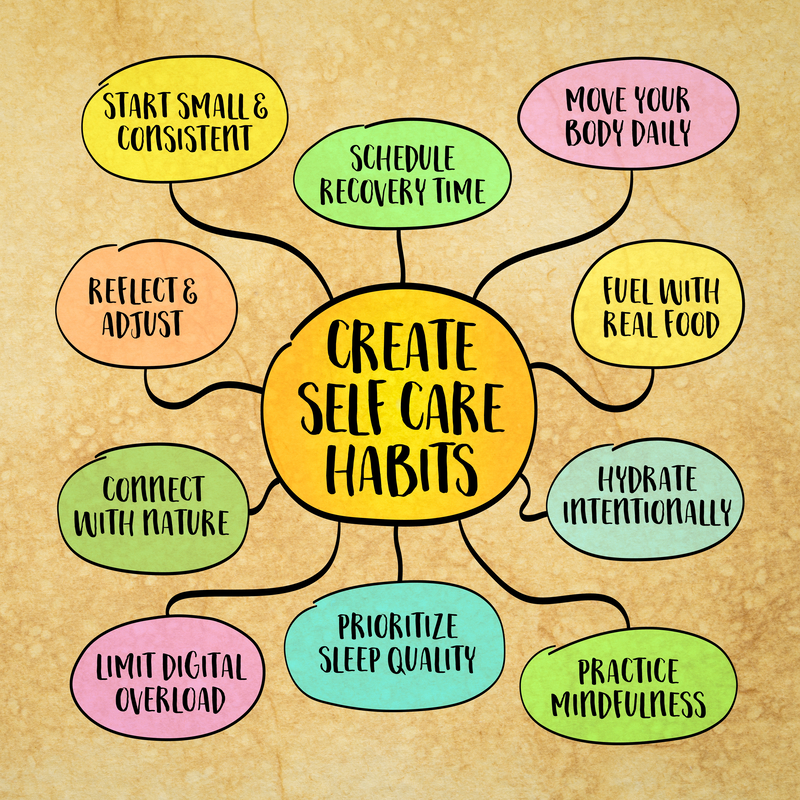
Physical self-care: Sleep. This is non-negotiable. If you’re chronically sleep-deprived, everything is harder. Protect your sleep. Nutrition—eating regular meals with actual nutrients, not just coffee and leftover chicken nuggets. Movement—whatever feels good, whether that’s walking, yoga, dancing, or lifting weights. Medical care—going to your own doctor appointments, taking prescribed medications, addressing health concerns instead of ignoring them.
Emotional self-care: Therapy or coaching. You need a space to process your own stress, grief, and overwhelm. Boundaries—saying no to things that drain you, protecting your time and energy. Emotional regulation practices—deep breathing, mindfulness, grounding techniques. Acknowledging your feelings instead of pushing them down.
Social self-care: Connection with friends who fill your cup, not drain it. Time with your partner that isn’t about logistics or kid-related stress. Community—parent support groups, book clubs, hobby groups. People who see you as more than just a parent.
Mental self-care: Time for your brain to rest—reading for pleasure, listening to music, watching a show you enjoy. Creative outlets—art, writing, cooking, gardening. Learning something new that has nothing to do with parenting or advocacy. Limiting news and social media when it’s adding to your stress.
Micro Self-Care: Small Acts That Matter
You don’t need hours of free time to practice self-care. Micro moments throughout the day add up. Five minutes of deep breathing before walking into an IEP meeting. Ten minutes of stretching before bed. Drinking water instead of reaching for your fourth cup of coffee. Listening to a song you love on your commute. Sitting outside for three minutes in the sun.
These aren’t luxuries. They’re survival strategies. They regulate your nervous system, reduce cortisol, and help you stay grounded. Start small. One intentional breath. One glass of water. One song. Build from there.
Making Time: It’s About Priorities, Not Availability
I know you’re busy. I know your schedule is packed. But here’s the truth: you make time for what you prioritize. You make time for IEP meetings. You make time for therapy appointments. You make time for work deadlines. You need to make time for yourself with the same level of commitment.
This doesn’t mean adding more to your plate. It means protecting time that already exists. Wake up 15 minutes earlier for coffee in silence. Use your lunch break to walk instead of scrolling your phone. Go to bed 30 minutes earlier instead of staying up cleaning. Ask your partner to handle bedtime one night a week so you can take a bath, read, or just exist alone for an hour.
And if you don’t have a partner or support? Ask for help. Trade childcare with another parent. Hire a babysitter for two hours on Saturday. Use respite services if available. Join a parent support group where you can connect while your kids play. You deserve support. You’re not supposed to do this alone.
When Guilt Shows Up
Guilt is going to show up. You’re going to feel guilty for taking time for yourself. For spending money on therapy. For asking someone else to watch your child so you can go for a run. For prioritizing your needs.
Here’s what I want you to do with that guilt: acknowledge it, thank it for trying to protect you, and do the thing anyway. Guilt is not a reliable indicator of right and wrong. It’s often just old programming telling you that your needs don’t matter. They do. You matter.
What Happens When You Don’t Take Care of Yourself
Burnout doesn’t happen overnight. It’s the result of chronic stress, depletion, and neglect of your own needs. And when you burn out, everything suffers. You become irritable, resentful, and emotionally unavailable. You get sick more often. You struggle to make decisions. You lose perspective. You snap at your kids, your partner, the school staff. You stop enjoying things you used to love. You feel numb or overwhelmed or both.
And here’s the thing: your child needs you for the long haul. This is a marathon, not a sprint. If you burn out in year three, you’re not going to make it to year ten, or fifteen, or adulthood. You have to pace yourself. You have to refuel. You have to take care of yourself so you can keep showing up.

Self-Care Is an Ongoing Practice
Self-care is not a one-time fix. It’s not something you do once and check off the list. It’s an ongoing practice—a daily commitment to honoring your needs, protecting your well-being, and showing up for yourself the way you show up for everyone else.
Some days, self-care will be a long walk and a good meal. Other days, it will be lowering your expectations and surviving on coffee and grace. Both are valid. The goal is not perfection. The goal is intentionality. The goal is remembering that you matter too.
So put on your oxygen mask. Take the nap. Go to therapy. Ask for help. Protect your boundaries. Say no. Your child needs you healthy, whole, and present. And you deserve to feel like a person, not just a caregiver. Start today. Start small. But start. You’re worth it.
Need help putting on your oxygen mask?
BOOK A FREE DISCOVERY CALL TODAY!