

Building Emotional Intelligence in Kids: The Skill That Changes Everything
“Emotional intelligence begins to develop in the earliest years. All the small exchanges children...” Daniel Goleman, author of Emotional Intelligence
Introduction:
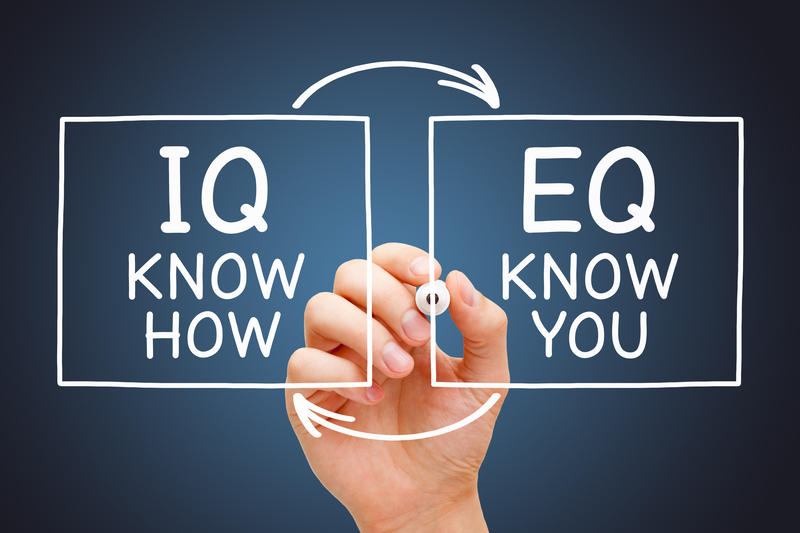
We spend a lot of time thinking about what our children know — their reading level, their math facts, their ability to name the planets in order. We spend far less time thinking about how well they understand what they feel, and yet emotional intelligence may be the single most important predictor of how a child navigates relationships, handles adversity, and builds a meaningful life.
Emotional intelligence isn't a fixed trait that children either have or don't. It's a set of skills, and like all skills, it can be taught, practiced, and strengthened over time. The good news is that the classroom for this learning is one you already occupy: everyday family life.
A Brain in Construction
What Emotional Intelligence Actually Means
The term "emotional intelligence" was popularized in the 1990s by psychologist Daniel Goleman, but the concept draws on decades of research in developmental psychology. At its core, emotional intelligence involves four interrelated capacities: recognizing your own emotions, managing those emotions effectively, understanding the emotions of others, and navigating social interactions with skill and empathy.
For children, this translates into concrete abilities. Can they name what they're feeling? Can they calm themselves down when they're upset, or do they need an adult to do that for them every time? Can they read the room — noticing that a friend is sad, or that a sibling is getting frustrated? Can they resolve a disagreement without it escalating into a meltdown?
These aren't qualities that children develop automatically. They develop them through experience, modeling, and the steady guidance of the adults in their lives.
It Starts With You
Children are remarkably astute observers of adult behavior, and they learn far more from what you do than from what you say. If you want to raise an emotionally intelligent child, the most powerful thing you can do is work on your own emotional intelligence.
This doesn't mean performing calm perfection at all times — that would be both impossible and unhelpful. What it means is letting your child see you navigate emotions honestly. When you're frustrated, you might say, "I'm feeling really frustrated right now, and I need a minute before I respond." When you've handled something poorly, you might circle back and say, "I snapped at you earlier, and that wasn't fair. I was stressed about something else, and I took it out on you. I'm sorry."
These small moments are enormously instructive. They teach children that emotions are normal, that they can be named and discussed, that even adults struggle with them, and that repair is always possible.
Name It to Tame It
One of the most well-supported strategies in emotional development is also one of the simplest: help children develop a rich emotional vocabulary. Research by neuroscientist Matthew Lieberman and others has shown that the act of labeling an emotion — putting a word to what you feel — actually reduces activity in the amygdala, the brain's alarm system. In other words, naming an emotion literally helps calm it down.
Young children often have access to only a handful of emotional words: happy, sad, mad, scared. But emotional experience is far more textured than that. A child who can distinguish between feeling disappointed, embarrassed, jealous, overwhelmed, and left out has a significant advantage over one who can only say "I feel bad."
You can build this vocabulary naturally. When you're reading together, pause and ask what a character might be feeling. When your child is upset, offer specific words: "It sounds like you might be feeling left out. Is that close?" When watching a movie, notice aloud: "She looks nervous, doesn't she? I think she's worried about what her friends will think."
Over time, these small interventions give children a richer internal map — and a map, as any traveler knows, makes the territory far less frightening.
Validation Before Correction
When a child is in the grip of a strong emotion, the instinct of most parents is to fix, minimize, or redirect. "You're fine." "It's not a big deal." "Stop crying and let's figure this out." These responses come from a place of love — we want our children to feel better — but they often have the opposite effect. A child whose emotion is dismissed doesn't learn that the emotion was unwarranted. They learn that their emotional experience is unwelcome.
Validation doesn't mean agreeing with every reaction or removing all consequences. It means communicating that the feeling itself is understandable before you address the behavior. "You're really angry that your sister took your toy. I get that — it's frustrating when someone takes something you're using." From that foundation, you can then address what happened: "And we still don't hit. Let's talk about what you can do instead."
This sequence — validate the emotion, then address the behavior — is one of the most powerful patterns in parenting. It teaches children that their emotions are valid even when their actions aren't, and it keeps the door open for them to come to you with difficult feelings in the future.
Let Them Struggle (a Little)
There is a well-intentioned but counterproductive tendency in modern parenting to smooth every path and prevent every discomfort. When a child is upset about a conflict with a friend, it's tempting to call the other parent and sort it out. When they're frustrated with a homework assignment, it's tempting to sit down and guide them through every step. When they're anxious about a social event, it's tempting to let them skip it.
These interventions, while understandable, rob children of the very experiences that build emotional resilience. Struggling with a hard math problem and eventually solving it teaches persistence. Navigating a friendship conflict and finding a resolution — even a messy one — teaches social problem-solving. Sitting with anxiety and discovering that it eventually passes teaches a profound lesson about the nature of difficult emotions.
This doesn't mean abandoning children to suffer. It means sitting with them in the discomfort rather than removing it. It means asking "What do you think you could try?" before jumping in with a solution. It means communicating confidence: "This is hard, and I think you can handle it. I'm right here if you need me."
The goal is not to eliminate struggle from your child's life. The goal is to be present for the struggle in a way that builds their confidence in their own capacity to cope.
Empathy Is Practiced, Not Preached
We tell children to be kind, to share, to think about how others feel. But empathy — the ability to genuinely understand and respond to another person's emotional experience — is not a lesson that lands through instruction alone. It's built through practice and modeling.
One of the most effective ways to develop empathy in children is to make other people's inner lives a regular topic of conversation. At dinner, you might ask: "How do you think your teacher felt when nobody was listening today?" After a playdate: "Your friend seemed a little quiet today. Did you notice that? What do you think might have been going on for her?" These aren't tests with right answers. They're invitations to practice perspective-taking, a skill that strengthens with use.
It also helps to narrate your own emotional experiences in age-appropriate ways. "I had a tough conversation with a coworker today and I felt a little hurt by something she said" shows children that emotional life is universal and that paying attention to feelings — yours and other people's — is a normal, valuable thing adults do.
And perhaps most importantly, empathy is taught by showing empathy. When you listen to your child without immediately jumping to advice, when you acknowledge their perspective even when you disagree, when you treat their small problems with the same seriousness they feel — you are teaching empathy in the most powerful way available.
Emotional Intelligence Grows Over Time
It's worth remembering that emotional intelligence isn't something you install during a single conversation or a dedicated parenting phase. It develops gradually, across thousands of small interactions, over the course of a childhood. There will be setbacks. There will be moments when your child — or you — handles a situation badly. That's not failure. That's the process.
What matters is the overall direction. A home where emotions are named rather than suppressed, where vulnerability is met with warmth rather than dismissal, where mistakes are opportunities for learning rather than sources of shame — that home is doing the work, even on the hard days.
The children who grow up in those homes won't be perfect emotional navigators. No one is. But they'll have something invaluable: the ability to understand themselves, connect with others, and weather the inevitable storms of life with something close to grace. And that, far more than any test score or trophy, is the kind of success that endures.
Want to Better Understand Your Child?
Parenting feels harder when you're unsure whether what you're seeing is normal or cause for concern. Parent coaching can help you understand your child's unique development, adjust your expectations, and respond to challenging behaviors with confidence and calm. Schedule a free discovery call today to learn how coaching can help you connect more deeply with your child and enjoy the parenting journey along the way.
BOOK A FREE DISCOVERY CALL TODAY!